
How to Become a Strength and Conditioning Coach: Career Guide
| 7 Min Read
Strength and conditioning coaches play a key role in athletic performance and injury prevention. They work with high school athletes, professional sports teams and other physically active individuals to design and implement training programs that build power, speed and resilience, while also helping athletes perform at their peak and reduce the risk of injury.
If you’re wondering how to become a strength and conditioning coach, you can find all the essential steps in this guide, from earning a relevant degree and gaining hands-on experience, to obtaining certification and advancing your knowledge through continued education. Along the way, you’ll see how academic programs, practical training and credentials like the CSCS or CSCCa prepare aspiring coaches for success in the growing fields of sports performance and sports medicine.
For those looking to start strong, Concordia University, St. Paul’s online Bachelor’s in Exercise Science program offers a flexible, accredited path that builds the foundational skills needed to launch your coaching career. Here is how to start your coaching path today.
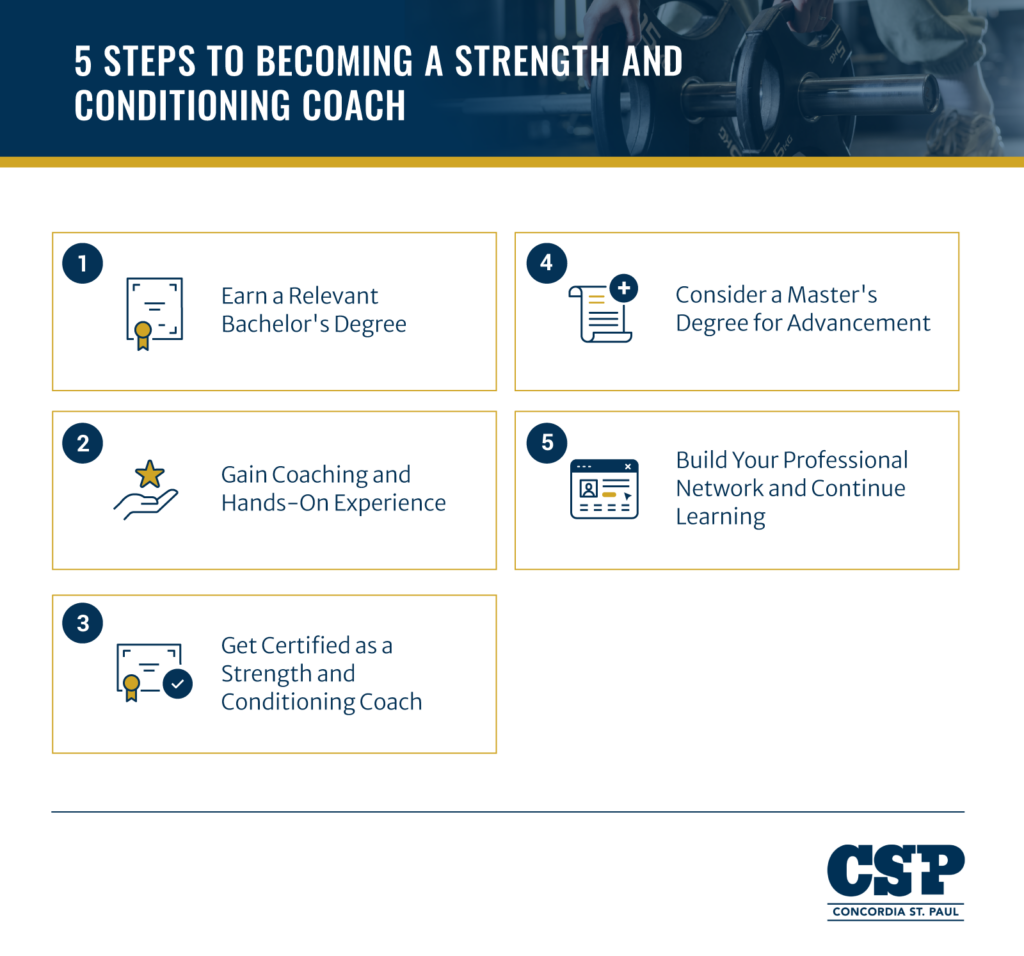
Step 1: Earn a Relevant Bachelor’s Degree
Most strength and conditioning coaches begin their careers with a bachelor’s degree in a related field such as exercise science, kinesiology or sports science. These degree programs lay the groundwork for success in the field by building knowledge in human movement, injury prevention and sports performance.
Coursework often includes topics like anatomy, biomechanics, nutrition and exercise physiology, all of which are essential to designing effective training programs and understanding the physical demands athletes face. A degree also prepares students to sit for major certification exams required for professional practice.
Students who are aspiring strength coaches can start building this foundation at Concordia University, St. Paul. The online Bachelor’s in Exercise Science is an accredited, flexible program designed around the demands of the profession.
Step 2: Gain Coaching and Hands-On Experience
When preparing to become a strength and conditioning coach, hands-on experience is where the real learning happens. Time spent working directly with athletes helps you test what you have learned in class, sharpen your leadership and communication skills, and build practical confidence in strength training and program design.
Internships, assistant coaching roles and volunteer opportunities with athletic trainers, sports teams or private gyms provide valuable exposure to real-world coaching environments. You could even intern or volunteer with a college athletic program to get hands-on experience, something many Concordia University, St. Paul students do as part of their degree. Through these experiences, students learn to adapt training programs to individual and team needs while building strong relationships with sports coaches and athletes alike.
Step 3: Get Certified as a Strength and Conditioning Coach
Professional certification is often required to work as a strength and conditioning coach. The Certified Strength and Conditioning Specialist (CSCS) credential from the National Strength and Conditioning Association (NSCA) is widely regarded as the gold standard in the industry. This certification demonstrates a coach’s expertise in exercise science and safe, effective program development.
Other certifications to consider include those from the Collegiate Strength and Conditioning Coaches Association (CSCCa) and the Performance Enhancement Specialist (PES) credential. Each certification requires passing a practical exam and meeting specific academic or experiential requirements.
Concordia University, St. Paul’s curriculum is designed to align with industry standards and help students prepare for these important certifications. Once certified, coaches must complete continuing education units (CEUs) to maintain their credentials and stay current with best practices.
Coach certification provides professional credibility and opens doors to full-time roles in many settings. These include athletic departments, sports medicine clinics and private performance centers.
Step 4: Consider a Master’s Degree for Advancement
While a bachelor’s degree gets your foot in the door, a master’s degree can set you apart in competitive roles such as collegiate coaching, athletic administration or positions with professional teams. Advanced education signals deeper expertise and a long-term commitment to the field.
Master’s degree programs in exercise science or coaching and athletic administration expand your knowledge of biomechanics, sports nutrition, exercise physiology and performance analysis. All of these are critical for managing athletes at elite levels. These programs also strengthen leadership, program management and research skills.
Concordia University, St. Paul offers two fully online graduate options tailored for career advancement: the M.S. in Exercise Science and the M.S. in Coaching and Athletic Administration. These flexible degree programs are designed for working professionals aiming to become a head strength and conditioning coach or step into strategic roles in sports performance settings.
Pursuing a master’s degree can also boost your salary potential and professional credibility. This is especially true in roles that require deep subject matter expertise or administrative leadership.
Step 5: Build Your Professional Network and Continue Learning
If you want to stay competitive in the strength and conditioning field, ongoing professional development must be part of your routine. This can mean keeping up with new training research, setting reminders for renewing certifications on time and making a real effort to build a strong network of peers and mentors you can learn from.
Attend NSCA and CSCCa workshops, conferences and webinars to earn CEUs and stay current on best practices. These events also provide valuable opportunities to connect with performance coaches, athletic trainers and other professionals in professional sports and collegiate athletics.
Networking can open doors to new opportunities and accelerate your career advancement, especially if you’re seeking roles in a very competitive strength and conditioning program or looking to grow within a full-time coaching position. Staying active in your professional community ensures that your knowledge stays fresh, your skills stay sharp and your name stays top of mind when new opportunities arise.
Career Outlook for Strength and Conditioning Coaches
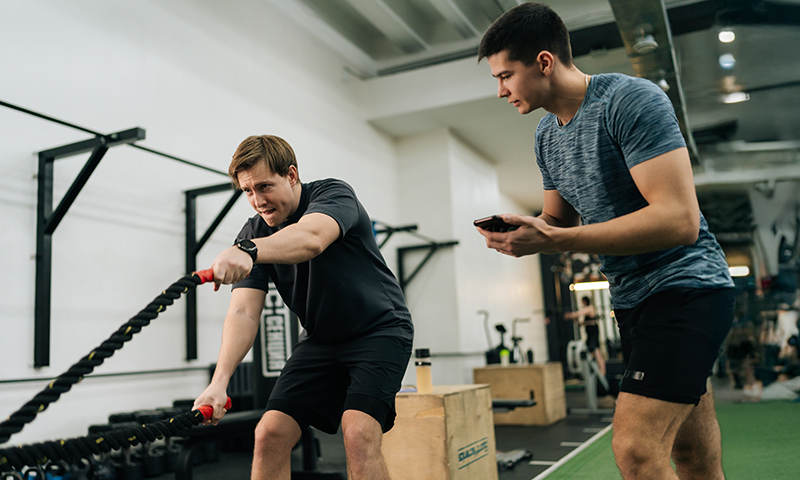
For certified strength and conditioning coaches, the career outlook is promising. According to the U.S. Bureau of Labor Statistics (BLS), demand is increasing at a higher rate in fitness training and instruction than in other careers. This is due in part to a greater need for trainers and conditioning coaches in high school and collegiate athletics, as well as in private sector settings like health clubs and performance training centers. As more schools and athletic programs prioritize injury prevention and athletic performance, skilled coaches are seeing a wider range of roles and more stable career paths.
Many strength and conditioning coaches begin in entry-level roles at high schools or private training facilities. Positions with collegiate or professional teams are more often reserved for those with advanced degrees and certifications, and industry data suggests that full-time strength coaches may earn roughly $56,000 to $99,000 per year, depending on setting and experience. Higher salaries are often tied to years of experience, continued education and credentials like the CSCS.
Long-term success in the field depends on staying current through continuing education and maintaining certifications. Coaches who pursue advanced degrees also increase their chances of moving into high-paying roles in sports medicine, athletic administration or elite sports performance programs.
Ready to level up your coaching career? Discover how Concordia University, St. Paul’s online Bachelor’s in Exercise Science can help you become a certified S&C coach, so you can advance in this growing field.
FAQs
If you’re exploring how to become a strength and conditioning coach, you probably have a few questions. Here we answer key topics about certification, career fitness and earning potential in the field.
How much do strength and conditioning coaches earn on average?
Earnings for strength and conditioning coaches vary widely based on experience, credentials and work setting. Entry-level coaches in high school or private facilities typically earn between $40,000 and $55,000 per year. At the collegiate level, salaries often range from $60,000 to $85,000, while coaches working with professional teams or in senior roles may earn over $100,000, with some reaching $132,000 to $165,000. Factors such as years of experience, degree level and certifications like the CSCS directly impact career outlook and salary potential.
Can you get a CSCS without a degree?
To sit for the CSCS certification exam from the NSCA, candidates must have a bachelor’s degree or be enrolled as a senior in a related field such as exercise science. Some alternative credentials, such as the Performance Enhancement Specialist (PES), can be earned without already having a degree, which makes them a practical option for people still completing their academic requirements. Before applying, take time to review each organization’s accreditation and eligibility standards so you know the credential will count toward your long-term goals.
Who should become a strength and conditioning coach?
If you’re passionate about strength training, athletic performance and helping others reach their potential, a career as a strength coach may be a great fit. This field is ideal for those with strong leadership and communication skills and an interest in biomechanics, exercise physiology and sports performance. Coaches thrive when they enjoy both teaching and learning, guiding athletes while continuously growing their own expertise.