
When to Get an MBA: What MBA Graduates Wish They Had Known Sooner
| 6 Min Read

Choosing when to get a Master of Business Administration (MBA) is rarely just an academic question. For many business professionals, this choice depends on career goals, personal life, financial aid and whether the job market rewards another graduate degree right now. Some MBA candidates want more years of work experience before applying, while others worry that waiting will slow their career path, limit earning potential or delay leadership roles.
To clarify the tradeoffs, a questionnaire conducted on behalf of Concordia University, St. Paul (CSP Global) surveyed 463 MBA graduates about the timing of their enrollment and what changed after they enrolled in an MBA program. Respondents reflected on their professional experience before business school, the opportunity cost of waiting, and the benefits of an MBA after completing coursework. The findings offer practical context for prospective MBA students who are weighing whether an online MBA or an in-person, on-campus experience is the right time and format for them.
Key Takeaways
- 73% of MBA graduates who delayed enrolling believe they’d be earning more today had they started sooner. Nearly half (47%) estimated the gap at $10,000 or more per year, and 28% said it’s at least $20,000.
- One-third of MBA graduates who delayed enrolling cited financial limitations as the primary reason.
- 72% of MBA graduates felt underqualified for roles they wanted before enrolling.
- 69% of MBA graduates said their career momentum increased after enrolling. Of those who saw new opportunities, 17% found them within three months and 85% within the first year.
- 47% of MBA graduates received a salary increase after enrolling, and 32% earned a promotion.
The Opportunity Cost of Waiting to Get an MBA
Delaying MBA admissions can feel reasonable when you are building professional experience, supporting family or deciding if an MBA is worth it. Many prospective MBA students also wait because the application process can seem daunting, especially when balancing full-time work, undergrad debt or uncertainty in the job market. Still, graduates who postponed enrollment often described a measurable opportunity cost.
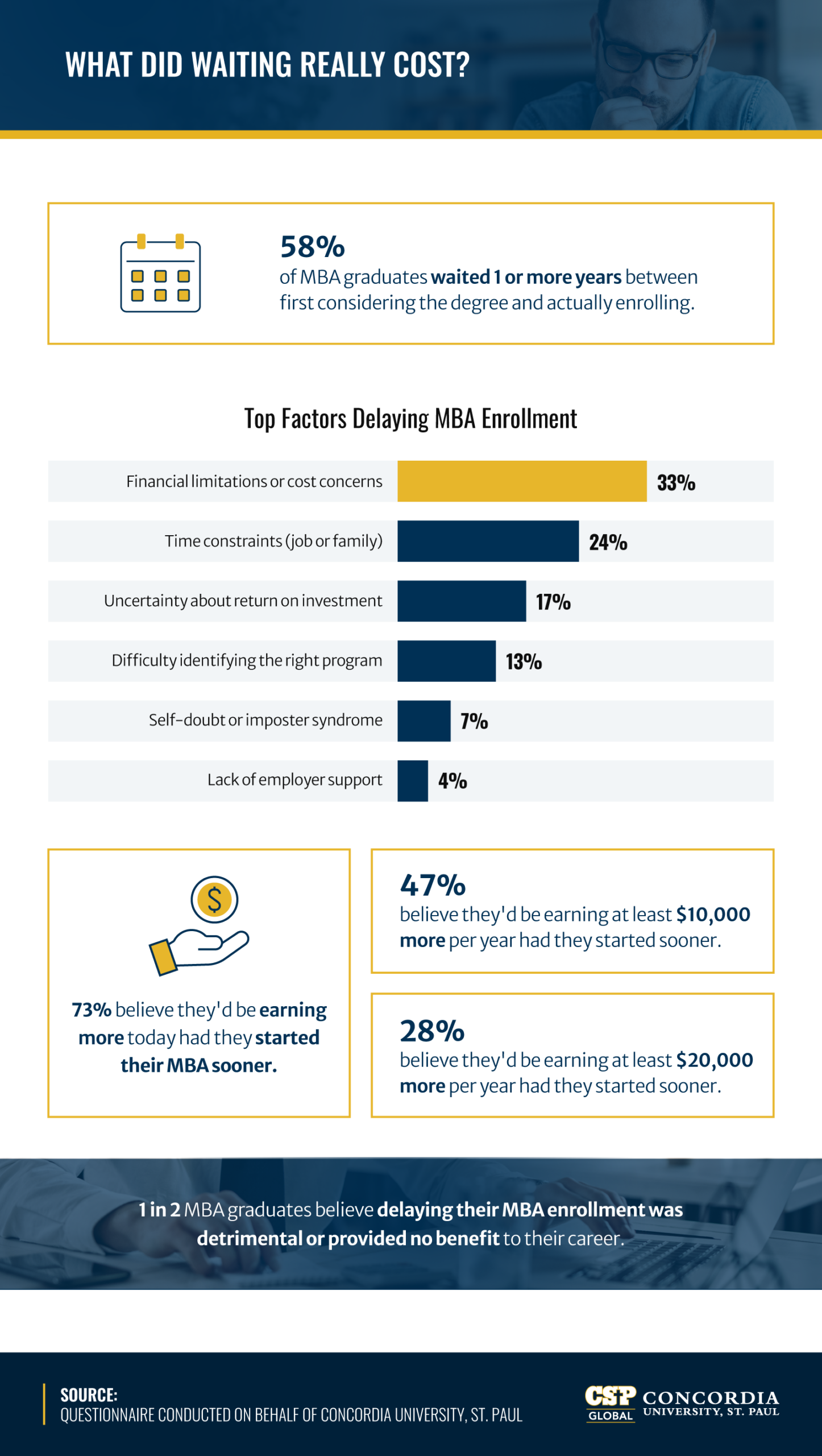
Seventy-three percent of MBA graduates who delayed enrolling believe they would be earning more today if they had started sooner. Nearly half (47%) estimated the gap at $10,000 or more per year, and 28% said it is at least $20,000 annually. One-quarter also felt the delay slowed their career advancement.
Nearly two in three graduates who delayed said they lost at least two years of career growth, and one in eight said they lost four or more years. Those who waited one year or more to enroll were more likely than those who enrolled within a year to report stagnant compensation growth (43% vs. 34%).
Money constraints were one of the most common barriers to enrolling at the right time. One in three graduates who delayed cited financial limitations as the primary reason, followed by time constraints (24%).
The Career Reality Before the MBA
Professionals often start exploring MBA programs when their career path begins to narrow. That can happen after several years of experience, when you want broader leadership skills, a stronger business skill set or a clearer direction for professional development. For others, the “perfect time” becomes urgent when they want to switch industries, move into leadership roles or stand out to recruiters.
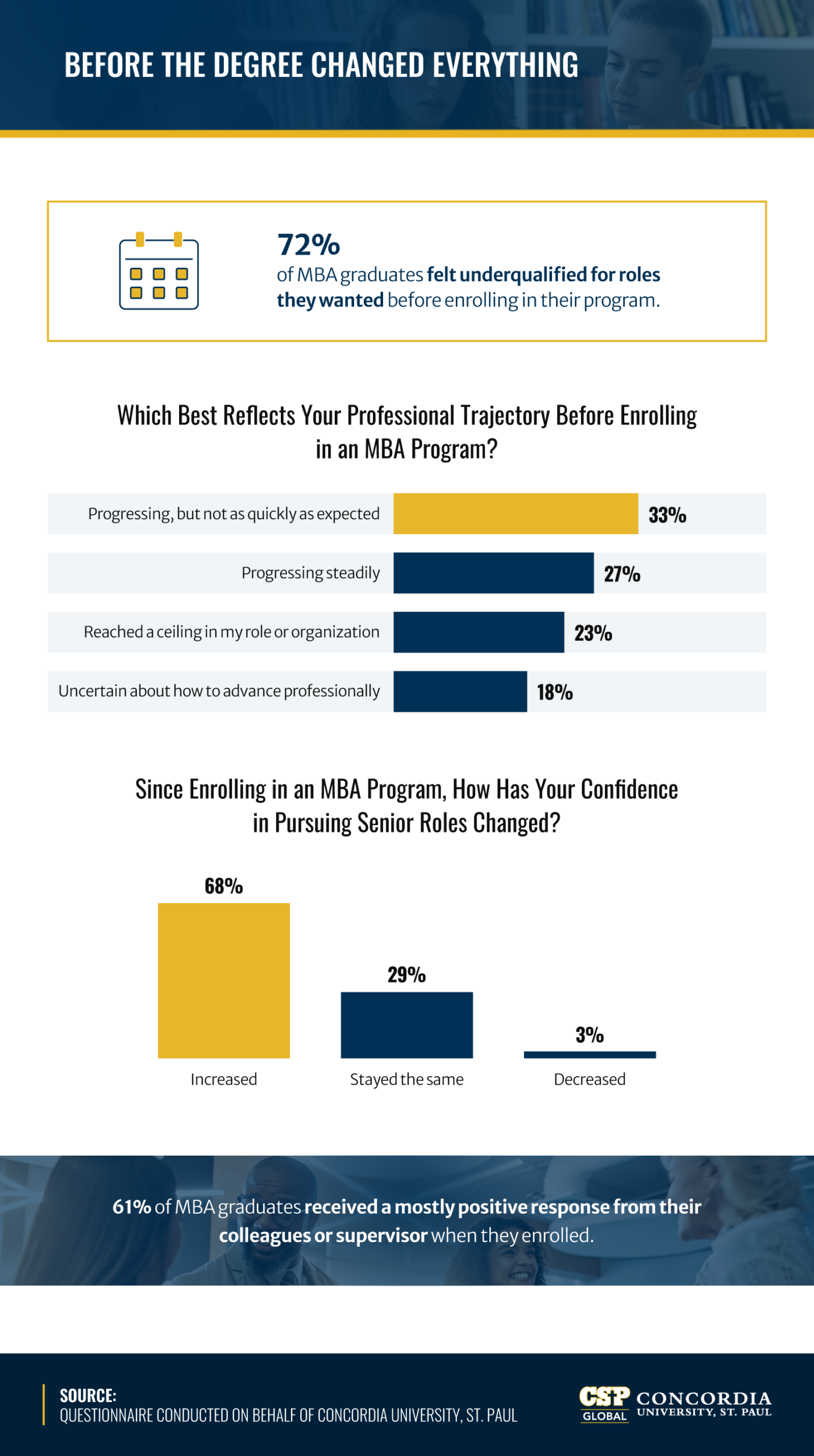
Before enrolling in an MBA program, 72% of graduates said they felt underqualified for the roles they wanted. That gap often shaped their professional goals and encouraged them to pursue a Master of Business Administration rather than relying solely on their undergrad credentials. Graduates described a range of career challenges before enrolling:
- 33% felt they were progressing but not as quickly as expected.
- 23% said they had reached a ceiling in their role or company.
- 18% were unsure how to advance professionally.
After entering business school, confidence about leadership roles improved. Sixty-eight percent said their confidence in pursuing senior roles increased since enrolling, which speaks to how MBA coursework can support long-term career goals.
What Changed After Enrolling
Many MBA students hope the degree will propel them forward. Depending on the MBA program format, those outcomes may show up through internships, extracurricular involvement, networking and structured professional development.
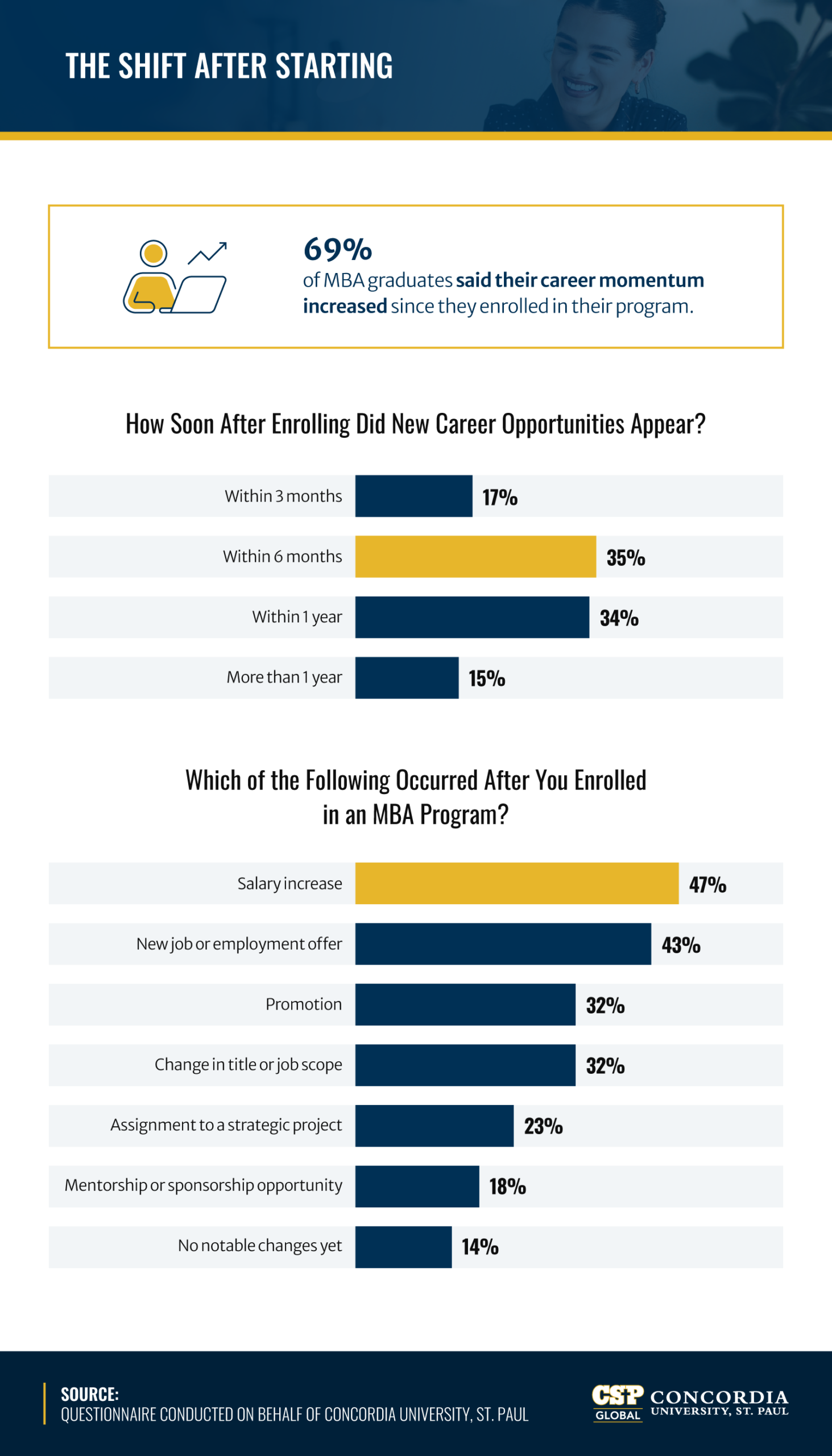
Sixty-nine percent of MBA graduates said their career momentum increased post-MBA. Among those who saw new opportunities, 17% found them within three months, and 85% saw changes within the first year. Career outcomes also shifted: 47% received a salary increase after enrolling in their master’s degree program, and 32% earned a promotion.
Advice MBA Graduates Shared About the Best Time to Enroll
Timing is not one-size-fits-all. Some graduates emphasized starting earlier in an early career stage once they had enough real-world professional experience to contribute. Others highlighted personal decision factors, such as family responsibilities, workload and how to make the degree worth it financially. These perspectives can help MBA candidates determine the right time to begin the MBA application and admissions process.
“The ‘opportunity cost’ of waiting is real. The sooner you have the degree, the sooner you hit the higher salary brackets and leadership opportunities that accelerate long-term wealth.”
– Gen Z man
“Family, babies, finances and uncertainties will always be there. Pick a time where you feel you can survive it and thrive.”
– Millennial woman
“Start when your career goals clearly require the degree, you have 3-6 years of meaningful experience to contribute and benefit from the program, and your financial and personal circumstances allow you to commit fully.”
– Gen Z man
“I used an MBA program to help with a career pivot. Make sure to pick the program that best fits the type of outcome you are looking for, not just the most prestigious name.”
– Millennial man
“Wait until you are in a position where you know there will be a promotion if you finish the MBA. Being overqualified for some entry-level jobs isn’t helpful.”
– Millennial woman
Timing the MBA Decision: When Career Readiness Meets Opportunity
Deciding when to get an MBA depends on your work experience, career goals and personal life realities, but the data suggests that long delays can entail real opportunity costs. Many graduates believed waiting affected earning potential, compensation growth and the pace of career advancement.
For prospective MBA students, the best time often arrives when you have enough years of professional experience to benefit from the coursework and when the degree aligns with a clear next step. Whether you are considering a part-time or full-time MBA program, planning for the application process and financial aid can help you choose the timing that best supports your career success.
Methodology
This study surveyed 463 MBA graduates on behalf of CSP Global to explore how the timing of MBA enrollment may relate to career progression. Respondents were asked about their highest level of education completed. Respondents had completed an MBA program. Data was collected in February 2026. The findings reflect a non-scientific, exploratory study and are not intended to be nationally representative of all MBA students or graduate business school candidates.
About Concordia University, St. Paul
Concordia University, St. Paul offers a flexible online MBA program designed for working professionals seeking to strengthen business leadership skills and advance their careers. Students build practical competencies in areas such as strategic decision-making, management and organizational leadership while completing coursework in a convenient online format. CSP Global’s online program supports professionals who want to continue gaining real-world experience while earning a graduate business degree that aligns with their long-term career goals.
Fair Use Statement
The information and findings in this article may be used for noncommercial purposes only. If shared or referenced, you must include proper attribution and a link back to Concordia University, St. Paul.