
Where MBA Graduates Are Moving After Graduation
| 5 Min Read

Geographic mobility has become a defining feature of the modern Master of Business Administration (MBA) career, shaped by shifting job markets, evolving workplace policies and changing lifestyle priorities. For MBA graduates, relocation decisions often balance career opportunities, the cost of living, and long-term professional growth across industries such as healthcare, financial services and technology.
The findings in this article come from a questionnaire conducted on behalf of Concordia University, St. Paul (CSP Global), surveying individuals who had completed an MBA degree. The questionnaire explored where MBA graduates relocated after graduation and what influenced their decision-making. It also examined how future mobility may shape post-MBA career paths as graduates apply leadership skills and business training in new markets.
Key Takeaways
- More than one-third of MBA graduates (36%) relocated to a new city after completing their degree.
- 77% prioritized career opportunities when deciding where to relocate.
- Nearly one in four (23%) accepted a lower salary to live in their preferred city.
- About one-third of MBA graduates (32%) said they are likely to move to a different city or country within the next two years.
Decision-Drivers Behind Post-MBA Relocation
Moving after graduation is rarely impulsive for business professionals. MBA graduates often evaluate how a new city aligns with their career path, leadership goals and ability to apply management skills in full-time roles across in-demand industries.
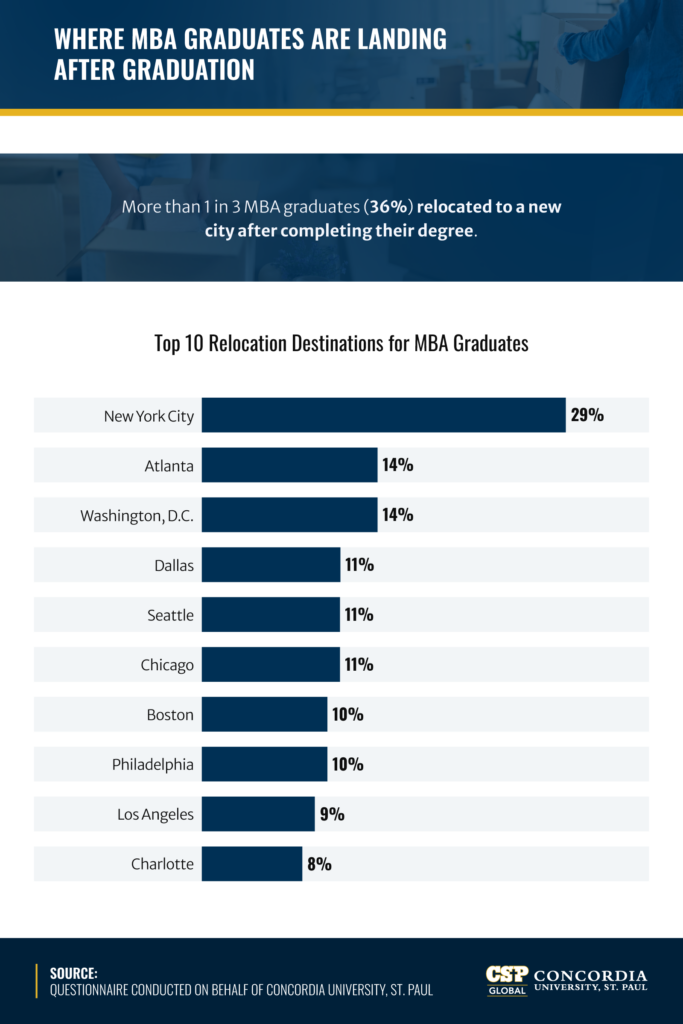
New York City was the top destination among the 36% of MBA graduates who relocated after completing their degree. Atlanta and Washington, D.C., were the next-most popular cities, at 14% each. Gen Z MBA graduates were the most mobile group, with 44% reporting that they relocated after earning their MBA degree. This trend suggests younger MBA candidates may be more willing to move to gain practical skills, internships and exposure to diverse business environments.
Technology also played a role in relocation planning: 14% of MBA grads used AI tools to assist with relocation decisions, with Gen Z grads again leading at 21%. These tools supported actions such as market research, cost comparisons and evaluation of career opportunities across cities.
Career advancement was the top factor influencing where MBA graduates chose to live. Seventy-seven percent prioritized career opportunities in their industry. Cost of living and social or lifestyle factors followed, each cited by 48% of respondents.
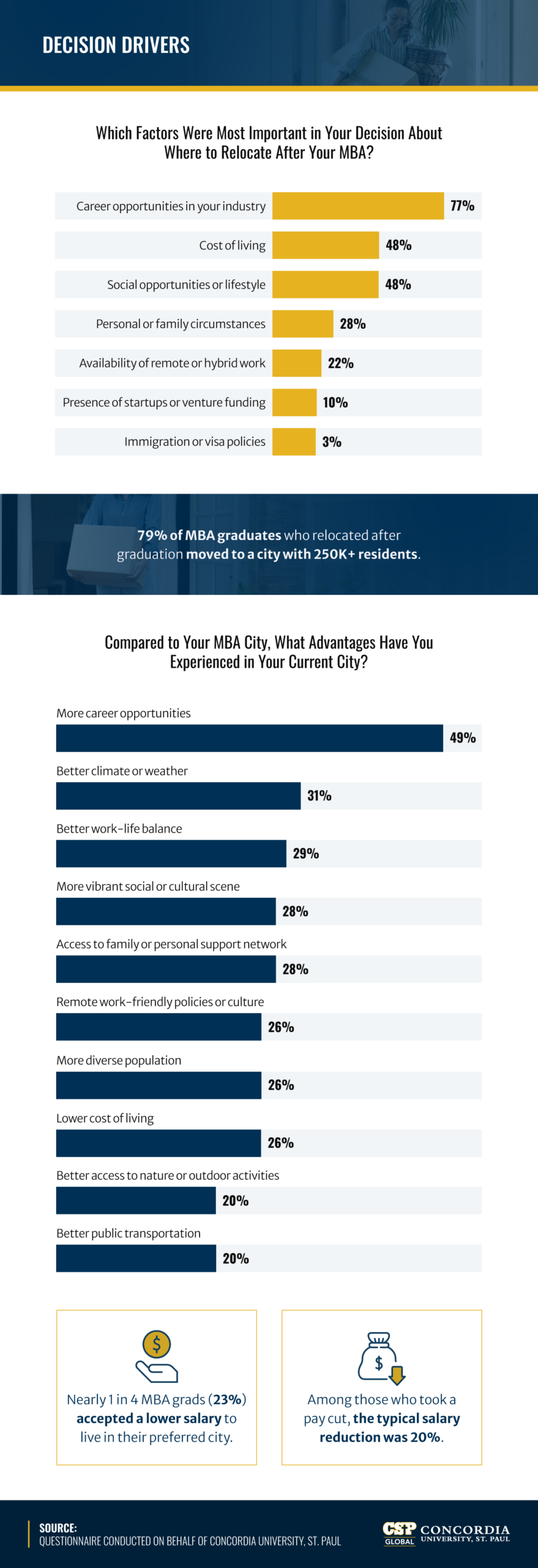
Nearly one in four MBA graduates accepted a lower salary to live in their preferred city, typically around 20% less than alternatives. The cities where graduates most frequently made this tradeoff were:
- Denver, Colorado (42%)
- Atlanta, Georgia (38%)
- Miami, Florida (33%)
- Dallas, Texas (26%)
- Philadelphia, Pennsylvania (25%)
Future Mobility, Career Flexibility and Return-to-Office Pressure
Mobility does not end once MBA grads settle into their first post-MBA role. Many continue to reassess their location as their careers progress, especially as employers revisit workplace policies. Future relocation decisions are closely tied to personal circumstances, housing costs, and access to leadership roles that strengthen management skills and business acumen.
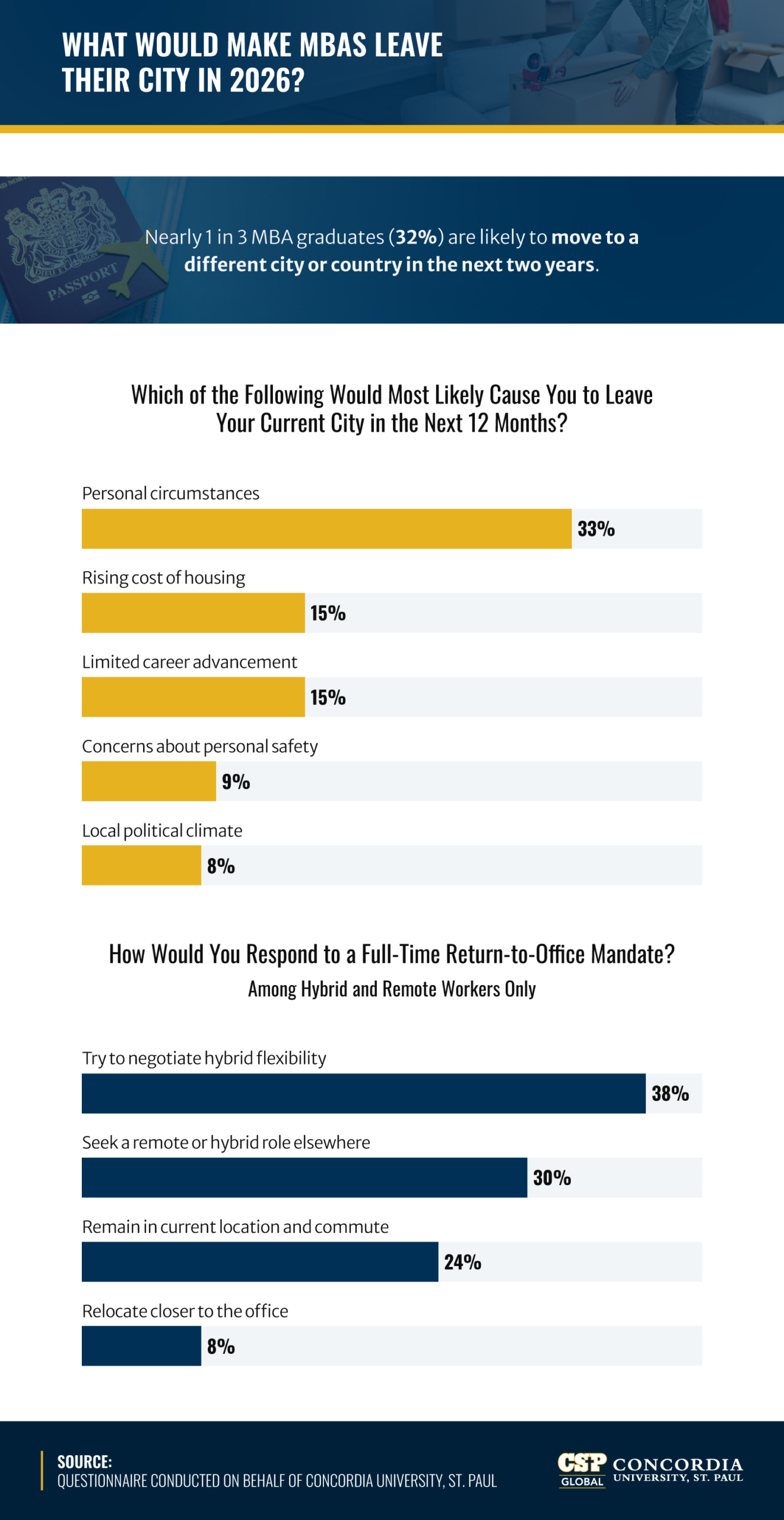
About one-third of MBA graduates said they are likely to move to a different city or country within the next two years, showing continued flexibility in post-MBA career planning. In the next 12 months, the most common reasons for moving included:
- Personal circumstances (33%)
- Rising housing costs (15%)
- Limited career advancement (15%)
Workplace expectations can also influence mobility. If faced with a full-time return-to-office mandate, MBA graduates said they would most likely attempt to negotiate for hybrid flexibility (38%), particularly Gen Z graduates (48%). Others (30%) indicated they would seek a remote or hybrid role elsewhere. Negotiation and problem-solving skills developed during business school clearly remain relevant well beyond graduation.
Potential MBA Career Paths and Typical Roles After Graduation
MBA graduates pursue a range of roles that reflect their professional experience, chosen specialization and career goals. These positions often influence relocation decisions, as graduates seek markets that support growth, offer leadership opportunities and provide competitive compensation.
Common career paths for MBA graduates include:
- Project management and product manager roles that focus on cross-functional coordination, timelines and strategic execution
- Business development positions centered on growth strategy, partnerships and market expansion
- Leadership roles in human resources and healthcare administration, where organizational strategy and people management intersect
- Analytical and strategy-driven roles that incorporate data analytics to support decision-making
Some graduates pursue more specialized or finance-oriented paths. Careers in entrepreneurship, international business and private equity often appeal to professionals seeking autonomy, global exposure or high-impact leadership roles. These paths may be more concentrated in specific regions, shaping post-MBA mobility.
Skills that support advancement across MBA roles include:
- A balanced skillset that combines technical expertise with strong soft skills
- Experience working with internal and external stakeholders
- Strategic communication and leadership capabilities
Digital networking also plays a role in career planning. Many MBA graduates use LinkedIn and other online platforms to explore job opportunities, evaluate role expectations, and compare average salary ranges across cities and industries as they consider relocation.
Mobility as a Defining MBA Advantage
Relocation has become a strategic component of the MBA career. Career opportunities, lifestyle priorities and changing workplace norms have professionals on the move. MBA graduates demonstrated a willingness to relocate, accept salary tradeoffs and leverage technology to secure roles that align with their professional goals.
As job markets continue to evolve, geographic mobility is likely to remain central to post-MBA success. For MBA students and graduates, making intentional location decisions that support career goals, leadership growth and industry demand remains a critical factor in professional outcomes.
Methodology
A questionnaire was administered to 469 MBA graduates on behalf of Concordia University, St. Paul to explore post-graduation relocation patterns, career decisions and workplace preferences. To participate, respondents had to have completed an MBA degree. Of those surveyed, 168 (36%) reported relocating to a new city after completing their degree. Data was collected in 2026. The findings reflect a non-scientific, exploratory study and are not intended to be nationally representative of all MBA graduates.
About Concordia University, St. Paul
Concordia University, St. Paul offers flexible, career-focused online degree programs designed for working professionals across business, health care, and education. CSP Global’s online MBA programs emphasize leadership, financial management, data-driven decision-making and practical skills applicable to today’s job market. Students benefit from curricula aligned with real-world business challenges and support from dedicated career services.
Fair Use Statement
The information in this article may be used for noncommercial purposes only. If shared or referenced, you must include proper attribution and a link back to Concordia University, St. Paul.